

The Gold
Gold has recently been in the spotlight due to its stable value and the surrounding political and economic developments. The recent announcement from the U.S. regarding the imposition of tariffs on imports of one kilogram gold bars has sparked widespread discussions in global markets. While gold futures prices have reached new record highs, spot prices have remained almost unchanged, indicating the influence of factors beyond immediate news on investor sentiment.
The global gold market remains rooted in stability, yet the U.S. government’s decision to impose tariffs on one kilogram gold bars has widened the gap between spot and futures prices. While futures market traders have responded strongly, supply and demand in the physical market have not experienced significant changes. This price divergence has drawn the attention of investors and analysts and could point to deeper shifts in trading strategies and supply chains.
Switzerland, as a key player in global gold trade, has expressed concerns about these tariffs. The Swiss Gold Association believes that the increased costs make gold bar exports to the U.S. less economically attractive. Given Switzerland’s historical role in refining and distributing gold, any disruption to this flow could have wide reaching effects on the global precious metals market. The tariffs not only impact prices but also alter the logistics of gold distribution. The rising costs could change the trade routes and the sources of gold bars for the U.S., which, in the long term, could affect refining centers, shipping routes, and even the role of gold in investment portfolios.
Alongside these developments, the Federal Reserve has played a significant role in shaping market sentiment toward gold. Recent U.S. economic data, including a slight drop in employment and a slowdown in service sector growth, have led traders to predict a potential rate cut in September. Many expect a 25 basis point reduction. Interest rates are crucial for gold, as it does not yield interest, and higher rates reduce gold’s appeal. A potential rate cut would lower the opportunity cost of holding gold, making it more attractive. As a result, the overall outlook for gold leans bullish.
The upcoming weeks will be critical for gold followers, as reports such as the Consumer Price Index (CPI), Producer Price Index (PPI), retail sales data, unemployment figures, and consumer confidence index could shape the Federal Reserve’s policy and, consequently, determine gold’s direction. Recent U.S. labor market data has shown a slight increase in unemployment claims, which may indicate signs of weakness in a previously resilient market. This puts the Federal Reserve in a delicate balance between supporting a rate cut to stimulate the economy and addressing concerns over inflationary pressures.
Despite these developments, the spot price of gold has remained relatively stable, indicating that the physical market is driven by broader forces such as long term investor demand, global economic uncertainty, and central bank policies. Investors continue to view gold as a safe haven asset amid political and economic uncertainty, a hedge against inflation, and a portfolio diversification tool.
The U.S. tariffs serve as a reminder that gold prices can also be influenced by geopolitical factors, and if other countries respond or trade tensions escalate, demand for gold is likely to increase.
The gold market is in a state of flux, with U.S. tariffs altering trade flows and raising concerns among key exporters, while economic signals from the U.S. point to a potential rate cut, which could further boost gold’s appeal. The futures market has reacted strongly to these news, yet the spot price has remained relatively unchanged. The release of key U.S. economic data and future statements from the Federal Reserve will determine gold’s next major move. Gold has once again proven its resilience and reliability as a long term store of value, even amid complex global political, economic, and trade conditions.
The Euro
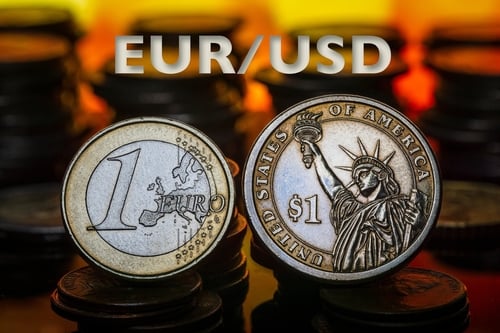
The EUR/USD currency pair has shown limited movement in recent days. Although the euro remains near its recent highs, it has not experienced significant growth. The direction of this currency pair is influenced by several global and regional political and economic factors. This week, the market’s focus has shifted more toward macroeconomic and political events that could determine the euro’s future trajectory.
EUR/USD is currently moving within an upward channel, with the market bouncing back from the higher lows within this channel. One of the most significant political developments this week is the potential meeting between Donald Trump and Vladimir Putin, scheduled to discuss a ceasefire in Eastern Europe, particularly regarding the Ukraine crisis. Such a development could help improve market sentiment, reduce uncertainty, and boost investor confidence in the region. While the euro initially reacted positively to this news, the growth was not sustained, and other factors quickly entered the market.
On the other hand, the U.S. dollar has shown a gradual rebound, which has hindered further euro growth. The strength of the dollar is not only attributed to the overall state of the U.S. economy but also influenced by speculation about the next Federal Reserve Chair. Rumors suggest that Christopher Waller, a Federal Reserve Governor, is the top candidate to replace Jerome Powell. Changes in Federal Reserve leadership typically lead to strong market reactions, particularly if a shift in interest rate policy is anticipated. Recent statements from Federal Reserve officials, including St. Louis Federal Reserve President Alberto Musalem, who has a balanced view on inflation and employment risks, have left investors awaiting a potential revision of the Fed’s monetary policy.
Recent U.S. economic data has also played a significant role in market movements. New reports show an increase in unemployment claims, with continuing claims reaching their highest level since late 2021, which could signal a softening labor market. Some economists have warned that this may be a sign of stagflation, which could prompt the Federal Reserve to ease monetary policy sooner than expected.
In the coming weeks, traders will closely watch data such as U.S. retail sales, unemployment claims reports, the University of Michigan consumer sentiment survey, and speeches from Federal Reserve officials, which could provide crucial clues about the direction of the U.S. economy and its monetary policies.
There are also significant developments in the Eurozone. Next week’s economic calendar includes inflation data from Italy and Germany, ZEW economic sentiment surveys for Germany and the Eurozone, and second quarter 2025 GDP growth data for the European Union. These reports are vital for assessing the health of the region’s economy and shaping the European Central Bank’s policies. The European Central Bank is expected to keep interest rates unchanged in September, with a slim chance of a rate cut. This cautious approach contrasts with speculation about an early rate reduction by the Federal Reserve.
The recent rally in the euro has mostly stalled due to the renewed strength of the U.S. dollar and uncertainties surrounding the Federal Reserve’s policies. Traders are weighing the likelihood of geopolitical developments against the reality of slowing economic growth and rising inflationary pressures in the U.S. In the European context, the focus is on continued progress in reducing inflation and improving business sentiment. Any surprises in upcoming data could trigger stronger movements in EUR/USD.
Overall, the EUR/USD currency pair is caught between hope and caution. Optimism surrounding progress in peace negotiations in Eastern Europe and signs of a softening U.S. labor market provide support for the euro. However, the strength of the dollar, speculation about Federal Reserve leadership, and mixed economic data have prevented the euro from making further gains. Traders are closely monitoring economic data and geopolitical developments. If peace talks progress and European data exceeds expectations, a new upward movement for the euro is possible. However, if the dollar remains strong and economic uncertainties persist, this currency pair will face more challenges.
The Pound
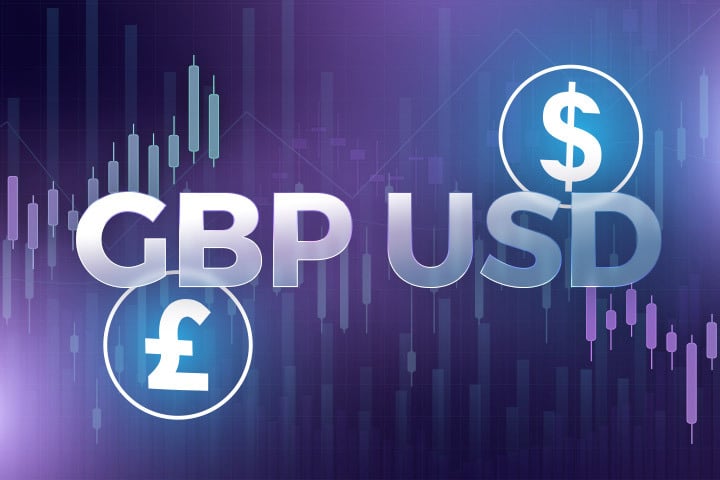
The GBP/USD currency pair remains stable, with traders analyzing recent developments from the Bank of England and the U.S. Federal Reserve. Despite recent changes in interest rates, the pound has managed to hold onto its gains, but the market is influenced by political rumors, changes in central bank leadership, and shifting economic expectations.
The Bank of England recently reduced interest rates by 25 basis points in a close 5-4 vote, which the market views as a cautious and likely one time adjustment for the year. There is significant disagreement among policymakers regarding the future path of interest rates. GBP/USD is currently within a downward channel, having reached the lower peaks of this channel. The Bank of England has warned that it does not intend to make rapid rate cuts, and the market sees an 87% chance that rates will remain unchanged at the September meeting. This suggests that investors expect the current policy to remain in place until new data is received.
Bank of England officials have also warned about mid term inflation pressures and are not inclined to ease policy quickly. The bank’s chief economist, Huw Pill, who opposed the rate cut, stated that while inflation is continuing to decrease, there is a risk of price increases reemerging in the next 2 to 3 years.
On the other hand, the U.S. dollar has seen some improvement, partly driven by political rumors about changes in Federal Reserve leadership. Speculation suggests that Christopher Waller, a Federal Reserve Governor, is a preferred candidate by the Trump administration to replace Jerome Powell in May 2026. These speculations could influence market expectations regarding future Federal Reserve policies, especially if a shift in interest rate strategy is considered. Additionally, Dr. Steven Mirren has been introduced as a potential replacement for Adriana Kugler, which is unlikely to have an immediate impact on interest rate policy but could influence internal discussions within the central bank.
St. Louis Federal Reserve President, Alberto Musalem, has stated that economic activity remains stable, with companies avoiding layoffs, but inflation is still not at the central bank’s target. He believes the risks are more focused on potential weakness in the labor market than on the economy overheating.
Next week, the release of significant reports, including retail sales, employment data, and GDP from the UK, as well as the U.S. Consumer Price Index, retail sales, Producer Price Index, and consumer confidence survey, is likely to bring more volatility to the GBP/USD market. The pound’s resistance after the rate cut indicates that the market had anticipated this move, and the absence of strong easing signals has supported the pound. In contrast, the relative improvement in the dollar is backed by more positive views on the U.S. economy and Federal Reserve leadership speculation.
The GBP/USD currency pair is moving within an upward channel, and next week’s data could rapidly change market direction. Until then, the market remains in a state of wait.
Overall, GBP/USD is in a steady state, with traders monitoring the Bank of England’s cautious rate cuts, stable economic signals from the Federal Reserve, and political rumors surrounding future central bank leadership. The pound shows resistance due to expectations of further rate cuts this year, while the dollar is supported by leadership speculation and strong economic indicators. Given the busy economic calendar, the coming days could lead to stronger market movements, but for now, the market remains more focused on awaiting clearer signals.

The Oil
The oil market is currently influenced by a mix of political, economic, and supply demand factors, keeping its price outlook in an unstable state. On the political front, escalating trade tensions between the U.S. and India, triggered by New Delhi’s purchase of Russian oil and the imposition of a 50% tariff by the U.S., have heightened uncertainty in the market. This move by the U.S., coupled with India’s rejection of Washington’s mediation, is part of broader geopolitical rivalries, which, particularly after the announcement of new sanctions and tariffs, are impacting the supply and demand flows of oil.
Meanwhile, geopolitical concerns related to the potential for nuclear conflict, heightened by warnings on the anniversary of the atomic bombing of Japan, are adding to the market’s psychological pressure. These conditions, along with the potential for a soon to occur meeting between U.S. President Donald Trump and Russian President Vladimir Putin, are significantly influencing the political outlook for the market. Should this meeting succeed in reducing sanctions and easing tensions, it could create a positive wave in the market. However, existing uncertainties, such as the potential role of the Ukrainian President and political deadlines, continue to present high risks for the market.
From a supply and demand perspective, the situation is mixed. In the U.S., the continuous decline in active oil rigs suggests a potential weakening of production and domestic demand. However, recent reports from the U.S. Energy Information Administration (EIA) highlight a significant drop in oil reserves, particularly over 3 million barrels last week, indicating that the domestic market is still facing supply constraints, which prevents a sharp price decline. On the other hand, OPEC’s decision to gradually increase production in September by adding more than half a million barrels per day has intensified downward pressure on prices, with analysts warning of a potential supply surplus in the market.
In terms of demand, the economic indicators from the largest oil consumers, the U.S. and China, show signs of slowing economic activity and reduced oil consumption. China’s oil imports in July increased compared to the previous year but saw a significant decline compared to the previous month, which is attributed to the completion of refinery stockpiling. Additionally, India, due to uncertainties surrounding tariffs, has postponed its purchase of Russian oil and is shifting towards alternative oil sources, particularly from the Middle East. This shift could alter the regional demand structure.
Overall, the oil market is at a fragile equilibrium, where downward pressures from trade tensions, declining global demand, and increased OPEC supply are competing with the relative support from the U.S. oil reserve drawdowns and the potential for reduced geopolitical tensions. Any progress in political negotiations between the U.S. and Russia could drive prices upward temporarily, while continued tensions and tariff increases would maintain the risk of further price declines.
Investors and traders should closely monitor the progress of political negotiations, oil reserve reports, and key economic indicators to predict market direction amid volatile conditions. Due to the numerous and fluctuating factors at play, the oil market will likely remain highly volatile, with macroeconomic and political decisions determining the trajectory of prices in the medium term.