
Jolts
News release day: Tuesday, July 29
This data represents the number of job openings (job postings) during the given period, which to some extent reflects the level of labor demand. However, not all job openings necessarily lead to actual hiring, so the reported figure does not inherently imply a healthy labor market, as companies may post job ads for various reasons.
The June JOLTS data indicates relative stability in the labor market; job openings increased and reached the highest level since November, but this growth was mainly driven by the leisure and hospitality sector. The increase was concentrated in one industry, while other sectors did not experience similar expansion.
In the breakdown of the data, both hiring and layoffs decreased simultaneously; this indicates that companies are cautious about increasing their workforce and are maintaining their current employment levels. The ratio of job openings to unemployed individuals rose, and voluntary quits also saw a slight increase. As a result, the data points to a relatively stable labor market.
Market Impact:
If job openings exceed expectations, the dollar and risk sensitive markets will temporarily benefit from a risk on sentiment; conversely, the euro and safe haven assets such as gold will suffer losses. However, this data alone is not trend setting, and unemployment rate and NFP data are considered more reliable indicators.
If job openings fall below expectations, the dollar will weaken while competing markets such as the euro and gold will rise; in this scenario, a risk off sentiment will emerge, and risk assets like equities and crypto will be adversely affected.

ADP Non-Farm Employment Change
News release day: Wednesday, July 30
The ADP data reflects the changes in private sector employment in the United States. Although historical experience has shown that this report does not necessarily align with the NFP and has not been a reliable predictor of it, it still provides a reasonable insight into the state of the private sector labor market.
The June data indicated significant weakness in the private labor market. For the first time in two years, employment change was negative, meaning the private sector experienced job losses. The decline in jobs was primarily due to a lack of new hiring, which reflects weak demand for labor. In fact, companies are not inclined to replace workers who leave their jobs.

Job reductions have mainly occurred in small companies, and the pressure on these types of companies is greater.
Also, wage growth has declined both among those who remained in their jobs and those who changed jobs compared to May.
Data Impact:
If ADP job changes come in higher than expected, the dollar strengthens and risk assets benefit from a risk on sentiment; in this scenario, the euro and gold decline. However, given other news that fosters risk off sentiment, safe haven currencies such as the yen and the franc are likely to be less affected by the ADP data.
If ADP job changes fall short of expectations, the dollar weakens significantly, while the euro and gold post an upward trend; in this scenario, the risk off sentiment intensifies, and risk markets (stocks and crypto) suffer losses.
GDP
News release day: Wednesday, July 30
This indicator reflects the total value of all domestic production of goods and services within a country over a specific period. The U.S. economy has been under pressure from tariffs and uncertainty about the trade outlook since the beginning of April in the second quarter. During this period, there was extensive discussion about tariff changes, and the economy was dominated by significant uncertainty.
We do not expect investment growth during this period, and this is likely to have a negative impact on GDP. Additionally, reports show that consumer demand has weakened due to the same uncertainty and the gradual weakening of the labor market. Therefore, demand is also unlikely to have a positive impact on GDP.
The trade balance is likely to be the turning point for economic growth in Q2, where imports have sharply declined compared to Q1. Although there is still no positive outlook for exports due to the trade war, the massive volume of imports that occurred in Q1 before tariffs were implemented has reversed in Q2.
Given the negative growth in Q1, if Q2 also shows negative growth, the economy will enter a recession, and risk off sentiment will dominate the market. However, expectations point to weak economic growth in the second quarter.
Market Impact of the Data:
If growth comes in higher than expected, it signals stronger economic activity than the market had anticipated, leading to a stronger dollar and increased risk appetite in the market. This scenario is particularly positive for the U.S. stock market; additionally, in this case, gold and the euro will weaken.
If growth comes in lower than expected, it indicates weaker economic activity, resulting in a weaker dollar and a decline in risk assets, especially equities. This scenario would benefit gold and the euro. Furthermore, if the growth figure falls slightly below expectations, there is a likelihood of weakness in oil and other widely used industrial commodities.

Federal Funds Rate
News release day: Wednesday, July 30
The Federal Reserve is expected to keep interest rates unchanged again at the July FOMC meeting. Given the state of inflation and the latest inflation report, a rate cut currently lacks economic justification. In the June meeting, the Fed emphasized its stance on holding rates steady, and the central bank will not alter interest rates until clearer data on U.S. trade policies is available.
The Federal Reserve is confident that, eventually, part of the tariff costs will be passed on to consumers, and before any rate cuts, they need to assess the impact of tariffs. June’s inflation data also showed the effects of tariffs on inflation on a much broader scale than before, and companies have begun passing costs on to consumers. Furthermore, inflationary pressures from tariffs are expected to intensify in the future, making even a rate cut in September appear unlikely under current assumptions.
Market Impact of the Data:
Given the current economic conditions and market expectations, the interest rate is highly likely to remain unchanged, and this outcome has already been priced in by the market.
If the interest rate is increased and comes in higher than expected, the dollar could experience a sharp, temporary rally. In this scenario, gold and the euro would see significant declines, and risk assets would undergo a strong correction.
However, the probability of a rate hike under current conditions is nearly zero, as the recent favorable inflation data provides no reason for an increase at this time.
If the interest rate is cut and comes in lower than expected, the dollar will weaken sharply.
The reaction of other markets will depend on the statement and remarks by Mr. Powell. Sometimes, an unexpected rate cut raises concerns about a recession, leading to risk off sentiment in the market. In such cases, the Fed Chair typically tries to reassure markets by emphasizing strong economic indicators and portraying the rate cut as a preventive measure to avoid a downturn. In this scenario, Mr. Powell’s remarks could be decisive in setting the direction of the markets.
FOMC Statement
News release day: Wednesday, July 30
In the June monetary policy statement, the central bank referred to relative stability in economic activity and strength in the labor market, and the tone was relatively hawkish. However, regarding prices, the Committee stated that inflation remained relatively high though based on the June inflation report, there is a possibility of a shift in tone on inflation in the July statement.
Any change in tone regarding inflation will be interpreted by the market as hawkish. The central bank’s tone on economic growth and the labor market is likely to remain unchanged.
The Committee also emphasized the Board’s readiness to adjust interest rates in the event of any sudden risks or a sharp deterioration in the labor market.
Market Impact of the Data:
If the statement contains hawkish elements suggesting a commitment to holding rates steady and confidence in solid economic growth, the dollar could temporarily strengthen. In this scenario, gold and the euro would temporarily weaken. While keeping rates unchanged is not favorable for risk assets, safe haven assets would benefit under this scenario.
If the statement includes dovish elements such as pointing to easing inflation, a weakening labor market, and the need to support the economy through rate cuts the dollar will weaken, and gold, the euro, and risk assets will benefit. In this scenario, with the prospect of rate cuts, demand shifts toward risk assets, and safe haven assets are likely to suffer.
FOMC Press Conference
News release day: Wednesday, July 30
Mr. Powell will, as usual, participate in the press conference following the FOMC meeting next week. This comes at a time when pressure from the White House to cut interest rates has reached its peak, with President Trump repeatedly attacking Powell over rate policy and strongly insisting on a rate cut.
Trump has even mentioned the possibility of removing Powell from office. However, this is a highly complex and lengthy legal process that would likely take several months. Beyond how likely this scenario is, the dismissal of the Fed Chair by the President would jeopardize the Federal Reserve’s independence and carry serious economic consequences. Even if Trump were to succeed in removing Powell, the resulting economic fallout and loss of investor confidence in the Fed and the U.S. government would likely prevent Trump from achieving his goals. Therefore, the likelihood of Powell’s removal is very low, but Trump will continue to exert maximum pressure on the Fed for rate cuts.
We have written a comprehensive and in depth article on the Trump – Powell conflict, analyzing the economic implications of Powell’s potential dismissal. The article delves into key economic and fundamental aspects, and we highly recommend reading it.
The issue of political pressure on the Federal Reserve is expected to be a focal point during Powell’s Wednesday night press conference, and it is likely that Mr. Powell will emphasize his hawkish stance.
Market Impact of the Data:
If Powell’s speech carries hawkish signals, the dollar may temporarily strengthen, while gold and the euro weaken. If the hawkish tone is based on economic growth and a strong labor market, risk assets may also react positively.
If Powell’s comments reflect a dovish tone such as controlled inflation and the Fed’s readiness to cut rates the dollar will weaken, and gold, the euro, and risk assets will rise.

Core PCE Price Index m/m
News release day: Thursday, July 31
The PCE Price Index is the Federal Reserve’s preferred gauge for evaluating inflation and thus holds high significance for the market. Considering the CPI and PPI data, which reflected the broad impact of tariffs, we also expect the PCE data to show the extent of tariff pressure on consumers.
Within the PPI data, airline fares, portfolio management, and healthcare services had the greatest influence on the PCE. Among these categories, inflation in air travel and healthcare remained mostly unchanged, while the cost of portfolio management increased primarily due to the booming stock market.
Contrary to the usual market behavior where core inflation was the primary focus, headline inflation is now gaining more attention due to the fading impact of service inflation and growing concerns over goods inflation and the same applies to the PCE data.
Within the data details, attention should be paid to disposable personal income, the savings rate, and the level of consumer demand (personal consumption expenditures).
Market Impact of the Data:
If inflation comes in higher than expected, expectations for a rate cut will decrease, and the dollar will strengthen in the short term. However, keeping interest rates unchanged amid weak economic growth is not favorable for the U.S. economy, and in the long run, the bearish bias on the dollar will likely persist. In this scenario, the euro and gold are likely to weaken in the short term.
If the data comes in below expectations, the dollar will weaken and risk assets will benefit. However, the impact on rate cut expectations may be limited, as this report covers June data, and the Federal Reserve is focusing on third quarter inflation for any potential rate cuts. In this scenario, gold and the euro will strengthen.

Employment Cost Index q/q
News release day: Thursday, July 31
This data reflects labor costs on a quarterly basis. To forecast this index, we look at PMI data, PCE figures, and wage growth rates. PMI reports for April, May, and June indicate rising labor cost pressures, part of which has been due to labor shortages.
In Q2, the U.S. labor market faced a shortage of workers due to declining labor force participation, deportation of immigrants, and companies’ reluctance to lay off staff.
However, there are also opposing forces. Labor demand was weak during this period, which could contribute to a decrease in labor costs. Wage growth and personal income data from the PCE report showed moderate and fluctuating trends.
Market Impact of the Data:
If labor costs come in higher than expected, it signals upward pressure on inflation, which will likely strengthen the dollar in the short term. However, under current conditions where the economy is at risk of recession this scenario would be unfavorable for producers and could trigger risk off sentiment.
In this scenario, the dollar strengthens in the short term, while the euro and gold move in the opposite direction. This would also be negative for risk assets.
Conversely, if the data comes in below expectations, the dollar will weaken, and risk assets, gold, and the euro will benefit.

Unemployment Claims
News release day: Thursday, July 31
This indicator shows the number of individuals who filed for unemployment benefits for the first time during the previous week. Unemployment claims have declined for the sixth consecutive month, generally indicating stability in the labor market.
In the week ending June 19, initial claims fell by 4,000 to 217,000 the lowest level since April.
However, continuing unemployment claims remained at 1.96 million with little change. This is the highest level since 2021 and suggests that unemployed individuals are taking longer to find new jobs. Continuing claims may exert downward pressure on the labor market.
Market Impact of the Data:
If the data comes in higher than expected (i.e., more unemployment claims), it signals further weakening in the labor market and leads to a weaker dollar. This scenario may trigger risk off sentiment, in which gold and safe haven currencies like the yen and the Swiss franc strengthen. The euro would also benefit from the dollar’s weakness.
However, unemployment claims data typically has a limited impact on the market and, on its own, is not a trend setting indicator.
Conversely, if the data comes in lower than expected, it will be seen as a sign of improvement in the labor market and may temporarily strengthen the dollar. However, sustained dollar strength in the medium term would depend on additional labor market data.
In this scenario, gold would decline, and the euro would likely weaken temporarily.

Average Hourly Earnings m/m
News release day: Friday, August 1
This indicator shows the average wage growth of U.S. employees. Wage growth is closely tied to labor demand; as unemployment decreases (if due to higher hiring and demand), wage growth tends to rise.
Under current conditions, with a weak labor market and low demand for workers, strong wage growth is not expected. Some analysts predict that the wage growth rate in July will remain unchanged compared to June.
Wage growth also has a strong relationship with inflation and consumer demand. In the services sector in particular, wages are a significant cost for service providers and directly impact the final price of goods and services.
This data can move in the opposite direction of the unemployment rate as seen in June where a decline or unchanged unemployment rate, if caused by lower labor force participation, does not necessarily lead to higher wage growth.
Market Impact of the Data:
If average hourly earnings come in higher than expected, the dollar will strengthen, and a risk on sentiment may emerge, which would benefit risk assets. Conversely, this scenario could exert slight downward pressure on gold and the euro.
However, two key considerations are important when assessing the market impact of this data:
- Attention should also be paid to other employment data released simultaneously, such as the unemployment rate or NFP, which typically carry more weight in the market.
Given the sharp decline in consumer demand reflected in the PCE report, rising incomes may not have a significant impact on the market. Even if incomes increase, they are not necessarily translating into spending, as consumers remain cautious.

Non-Farm Employment Change
News release day: Friday, August 1
This indicator reflects changes in non farm jobs (net hires and layoffs) across both the private and public sectors. In June, there was an increase of 147,000 jobs, which significantly exceeded expectations and surprised the market. However, the NFP increase was largely driven by gains in the public and education sectors, while private sector job growth remained weak and below expectations.
According to the July PMI survey by S&P Global (conducted between July 10 and 23), employment trends in manufacturing and services diverged sharply: the employment index in manufacturing declined, while service sector job growth saw a notable rise. However, the data does not indicate widespread layoffs that would severely impact the NFP figure.
Market Impact of the Data:
If the NFP comes in higher than expected, it will strengthen the dollar in the short term and cause rival currencies (euro, franc, pound, and yen) as well as gold to decline. In this scenario, if the NFP significantly exceeds expectations, it would strongly support risk assets in the short term.
If the employment change comes in lower than expected, the dollar will weaken, and a strong risk off sentiment will emerge. In this scenario, rival currencies (euro, franc, and Japanese yen) and gold will strengthen, while risk assets will decline depending on the degree of weakness in the data.
Unemployment Rate
News release day: Friday, August 1
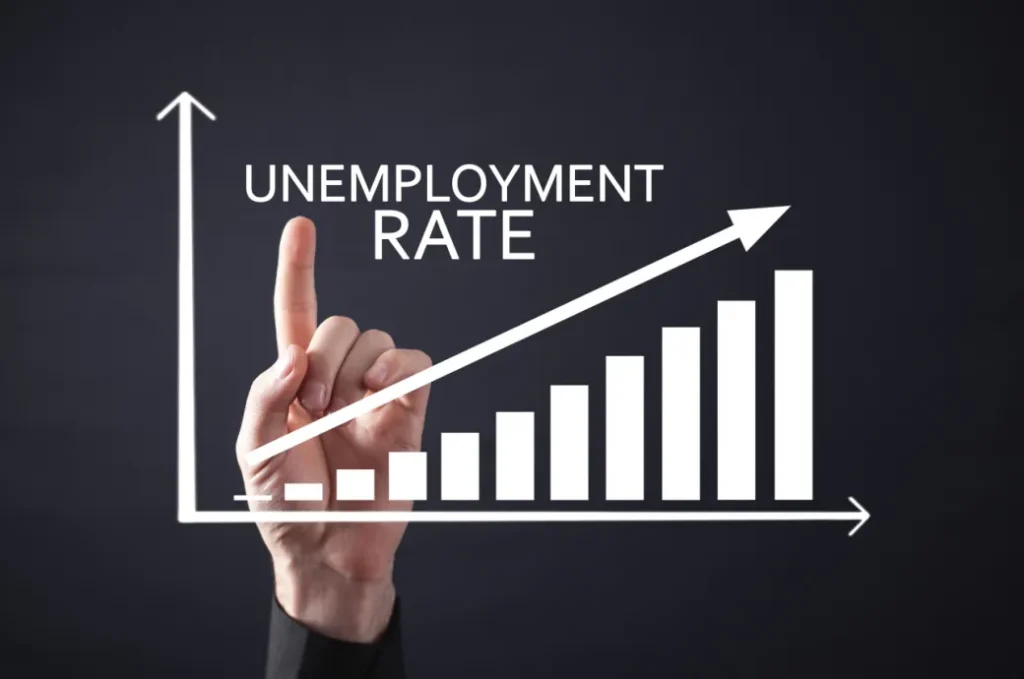
The unemployment rate shows the percentage of individuals who are actively seeking work among those participating in the labor market (i.e., either employed or actively looking for work). It is important to note that individuals not participating in the labor force are not included in the unemployment rate calculation.
In June, the unemployment rate unexpectedly declined, mainly due to a drop in the labor force participation rate which cannot be considered a sign of strong economic activity. However, the data does not reflect significant weakness either, and it is more appropriate to describe the U.S. labor market as experiencing “gradual weakening.”
For the July data, the increase in continuing unemployment claims is likely to lead to a rise in the unemployment rate, with some analysts expecting it to climb to 4.2%. Based on PMI data, we do not anticipate severe weakness in the U.S. labor market.
Market Impact of the Data:
If the unemployment rate comes in lower than expected, the dollar will strengthen and a risk on sentiment may emerge. In this scenario, rival currencies (euro, yen, franc, and pound) and gold will weaken, while risk assets will benefit. It’s worth noting that if the data is mixed for example, a decline in the unemployment rate alongside weaker job creation the market typically places more weight on the unemployment rate.
If the unemployment rate comes in higher than expected, the dollar will weaken and risk off sentiment will dominate. In this scenario, rival currencies (euro, pound, yen, and franc) and gold will strengthen, while risk assets will decline.

ISM Manufacturing PMI
News release day: Friday, August 1
The latest U.S. PMI report reveals a sharp divergence between the manufacturing and services sectors. While the services sector continued to expand, the manufacturing sector fell into contraction territory. The downturn in manufacturing is largely attributed to the impact of tariffs. New orders declined for the first time this year, mainly due to a drop in exports. Employment levels and inventory holdings also decreased; however, input prices remain elevated. The report details reflect mild stagflationary signals.
Nearly two-thirds of manufacturers attributed rising costs to tariffs. Despite weakness in employment, wages increased due to labor shortages. Similarly, raw material prices, influenced by tariffs, saw an uptick.
In the upcoming Manufacturing PMI report, further weakness in the manufacturing sector is expected. However, if broad trade agreements are reached in the coming months, reduced uncertainty may lead to a recovery in manufacturing activity.
Market Impact:
If the data comes in above expectations, it will be seen as a sign of expanding U.S. industrial activity, strengthening the U.S. dollar. In this scenario, risk on sentiment is likely to prevail, boosting risk assets such as equities and cryptocurrencies, while the euro and gold may face downward pressure.
Conversely, if the data is below expectations, the dollar is likely to continue its downward trend, and risk assets may suffer from risk off sentiment. In this case, the euro and safe haven assets are expected to strengthen.
Given the long term bearish bias on the dollar, any temporary rallies in the Dollar Index (DXY) may present favorable opportunities for medium term short positions.