

Fed Chair Powell Speaks
News release day: Tuesday, July 22
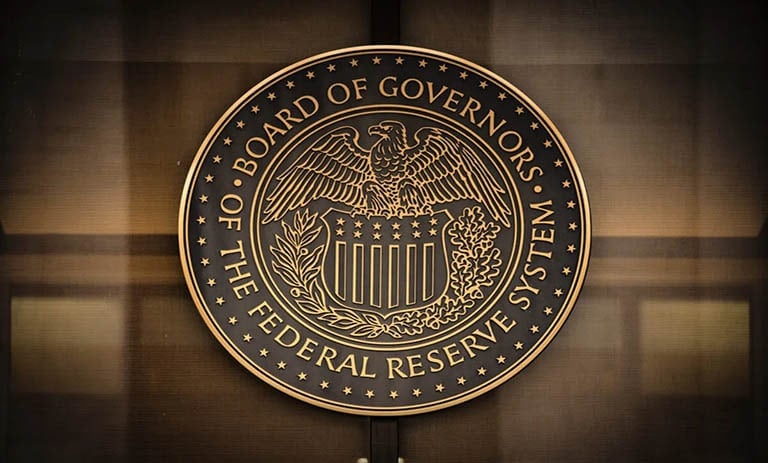
Mr. Powell will speak on Tuesday at the Federal Reserve’s Integrated Review of the Capital Framework event. The main topic of this event is a comprehensive review of the capital framework for large banks. This event was established after the 2008 financial crisis and aims to supervise, manage, and update financial regulations for major banks.
At this event, the Federal Reserve will examine the minimum capital requirements to cover potential losses, the quality of current regulations in maintaining the stability of the financial system, and the impact of these regulations on financial markets. Mr. Powell’s speech at this program is not about monetary policy, and discussions about banking regulations tend to have long term effects on the market.
The current approach of the central bank is to keep interest rates steady in order to assess the impact of tariffs on inflation; given the June inflation data, the current approach seems reasonable, and if inflationary pressures persist, there is even a possibility that interest rates will remain unchanged in the September meeting.
Impact of Data on the market
The topic of this session is not about monetary policy, but if Mr. Powell refers to monetary policy, there is a possibility of a limited market impact. If Mr. Powell’s stance reflects a continuation of the current approach, the short term strengthening of the dollar will continue. This would be negative for stocks, risk assets, and gold.
If Mr. Powell adopts a more dovish approach (which is unlikely), the dollar will weaken, and risk markets stocks and crypto, gold, and the euro will benefit.
Unemployment Claims
News release day: Thursday, July 24
Unemployment claims for the week ending July 18 came in at 221,000, lower than expectations; this marks the third consecutive week that unemployment benefit applicants have been below analysts’ forecasts, indicating a flexibility of the labor market.
Continuing jobless claims saw a slight decline to 1.96 million, but this remains the highest level since 2021, suggesting that Americans are facing challenges in finding new employment.

In the latest U.S. employment data, relative stability is observed in the labor market; despite the underlying weakness present in the details of the data, the labor market has maintained its relative strength, which has strengthened the dollar in recent weeks. However, in the long term, the dollar still holds a gradually bearish bias.
Impact of Data on the market
If the data comes in above expectations (unemployment claims higher than expected), it would signal further weakening in the labor market and lead to a weaker dollar. This scenario could trigger risk off sentiment, in which gold and safe haven currencies such as the yen and the Swiss franc strengthen. The euro would also benefit from a weaker dollar.
However, unemployment claims data typically has a limited impact on the market and cannot, on its own, establish a trend.
Conversely, if the data comes in below expectations, it would be seen as a sign of labor market improvement and could temporarily strengthen the dollar. However, in the medium term, further dollar strength would depend on additional labor market data.
In this scenario, gold would decline, and the euro would likely weaken temporarily.

Flash Manufacturing PMI
News release day: Thursday, July 24
The ISM Manufacturing PMI has remained in contraction territory for the past four months, indicating that manufacturers are under more pressure than ever. The raw material price index has stabilized at the highest levels in the past three years; at the same time, the sharp decline in new orders and the employment index is concerning. The employment index has dropped to its lowest level in three years and has been in contraction territory for the past five months.
Looking at inflation reports and the employment situation within the PMI data, it becomes evident that manufacturers, in an attempt to offset tariff costs, have resorted to raising final product prices (passing costs to the consumer) and reducing demand for labor. This situation carries slight signs of stagflation, with the burden of tariffs falling more heavily on the industrial sector.
The Impact of Data on the Market
Unlike in the past when the services PMI held greater importance, now, due to tariff challenges, the manufacturing PMI is in the spotlight.
If the data comes in higher than expected, it is interpreted as a sign of improvement in the manufacturing sector, leading to a strengthening of the dollar and a decline in the euro. The reaction of risk markets and gold depends on the details of the data; if the index growth results from improved employment or new orders, risk markets benefit. However, if the index growth stems from rising raw material prices without employment growth, it will not be favorable for risk markets. Of course, in the short term after the release, the market reacts only slightly to these factors.
If the data comes in lower than expected, the dollar weakens and the euro strengthens. For risk markets and gold, expectations of interest rate cuts and the inflation index are significant; if the price index shows a decline, inflation concerns ease slightly, supporting the case for rate cuts. In this scenario, risk markets and gold benefit. But if the inflation index still indicates high costs, it supports maintaining interest rates and weakens risk markets and gold.
Flash Services PMI
News release day: Thursday, July 24
The conditions in the services sector are also quite similar to manufacturing; however, companies, due to weak demand, lack the ability to pass on costs to consumers. The ISM Services PMI has barely remained in expansion territory, and managers have pointed to significant uncertainty.
In the services sector, companies are also laying off employees due to uncertainty and weak demand. This has led to a three month employment recession in the services sector.

There is also a possibility of inflation spilling over from the manufacturing sector into services, as continued inflation may increase the likelihood of wage increase demands from employees, thereby creating cost pressure on inflation in this sector.
The Impact of Data on the Market
In the current environment, the Services PMI holds less importance than before, as due to the wave of tariffs, market attention has shifted toward the manufacturing sector.
If the data comes in higher than expected, it is seen as a sign of growth in the services sector, leading to a strengthening of the dollar and a weakening of the euro. The reaction of risk markets and gold depends on the data details. If the details show inflation growth alongside weakening employment and business activity, it generates a risk off sentiment and, if such signs persist in the medium term, it will be negative for risk markets and positive for gold.
Conversely, if the data comes in lower than expected, the dollar weakens and the euro strengthens. For risk markets and gold, if the index decline is due to a reduction in final product prices, it weakens interest rate cut expectations and benefits risk markets. However, if the weakness in the PMI stems from declines in employment and business activity indicators, the data will be negative for risk markets and supportive of gold.