
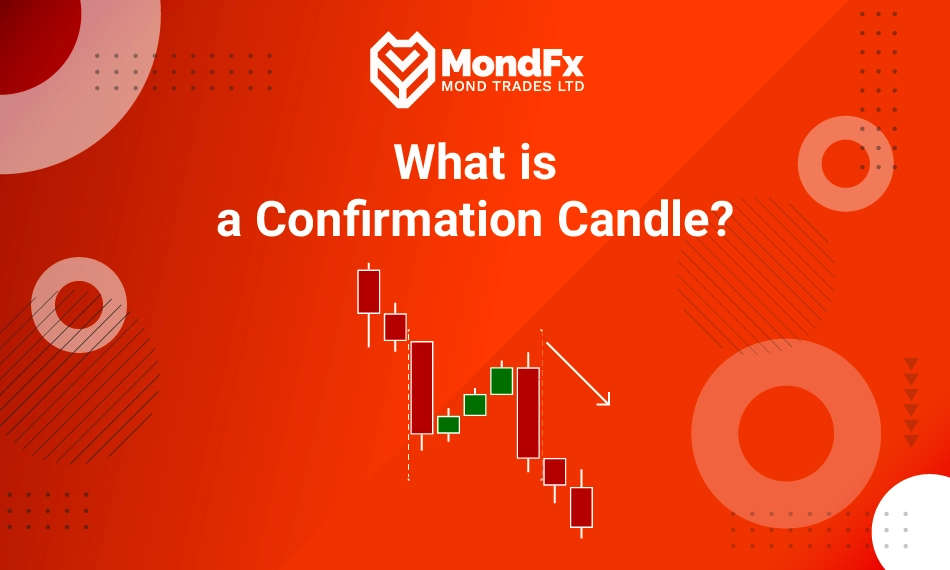
A confirmation candle is one of the important concepts in technical analysis that traders use to confirm the validity of entry and exit signals in financial markets. This tool helps investors make more precise and low risk decisions and gain a better understanding of price movements.
Definition of a Confirmation Candle
A confirmation candle refers to a candlestick that forms after a candlestick pattern or price movement and confirms the signal of that pattern. This candle must meet specific criteria to be considered a valid confirmation. Typically, a confirmation candle should have high volume, a suitable size, and close within a specific range that indicates the future market direction.
Characteristics of a Confirmation Candle
A valid confirmation candle must have the following characteristics to confirm the provided signal with greater certainty:
1. Increased Trading Volume
High trading volume in the confirmation candle is a sign of active trader participation in the market and confirms the direction of the price movement. Increased volume generally adds more credibility to the issued signal.
2. Closing in the Appropriate Range
The closing position of the confirmation candle plays a significant role in its validity. In an uptrend, closing the confirmation candle near the price’s peak, and in a downtrend, closing near the price’s bottom indicates the strength of the trend.
3. Larger Size
The confirmation candle is usually larger than the previous candles. This feature signifies greater strength in the confirmed direction and provides traders with more confidence.
4. Aligned with the Signal
The confirmation candle’s direction must align with the issued signal. For example, if a bullish reversal pattern is observed, the confirmation candle should also be bullish, and vice versa in bearish patterns, the confirmation candle should be bearish.
These features combined can help traders make more accurate and low risk decisions in financial markets.
Types of Confirmation Candles
Confirmation candles can be identified in two types: bullish and bearish.
- Bullish Confirmation Candle: This type of candle typically appears after bullish reversal patterns such as the “Hammer” or “Bullish Engulfing” and confirms a price increase by closing near the day’s peak.
- Bearish Confirmation Candle: This candle type usually forms after bearish reversal patterns such as the “Shooting Star” or “Bearish Engulfing” and confirms the continuation of a downtrend by closing near the day’s low.
Importance of Using a Confirmation Candle
A confirmation candle plays a crucial role in financial market trading and helps traders gain more confidence in the validity of entry and exit signals. In financial markets, receiving false signals is common, and entering or exiting based on such misleading signals can result in significant losses. By increasing confidence in the issued signals, the confirmation candle significantly reduces trading risks.
Without a confirmation candle, traders may enter the market based on misleading signs. This is particularly important during periods of market volatility. The confirmation candle, by emphasizing increased trading volume, the correct price direction, and closing within key ranges, can provide more reliable signals.

How to Identify a Confirmation Candle
To accurately identify a confirmation candle on a price chart, several important steps must be carefully followed. First, the trader must identify a specific candlestick pattern. This pattern can signal either a trend reversal or the continuation of the market’s movement.
After identifying the primary pattern, one must wait for the confirmation candle to form. A confirmation candle is considered valid when its trading volume shows a noticeable increase compared to previous candles. Increased volume is a sign that more investors are entering the market, supporting the direction of price movement.
In addition to trading volume, the position where the candle closes is also crucial. For a bullish signal, the confirmation candle should close near the day’s high, and for bearish signals, the confirmation candle should close near the day’s low. This characteristic indicates the strength of the trend and increases the likelihood that the movement will continue in the same direction.
Finally, once the confirmation candle meets all the above conditions, traders can enter the trade with greater confidence. This final step is extremely important, and traders should avoid making decisions based solely on the initial candlestick pattern. The confirmation candle strengthens the reliability of the signal and enhances the confidence of traders when entering or exiting the market.
Practical Examples of Confirmation Candles
One common example of a confirmation candle in financial markets is the Hammer pattern. This pattern forms at the end of a downtrend, where a candle with a long lower shadow and a small body appears. In this scenario, if the following candle is bullish, has high volume, and closes near the day’s high, this bullish confirmation candle serves as a strong signal for upward price movement.
Another example is the Bearish Engulfing pattern. This pattern appears at the end of an uptrend and indicates a possible reversal toward a downtrend. If the confirmation candle that follows is a strong bearish candle, closes near the day’s low, and shows higher volume, it can be considered a valid bearish confirmation.
Key Considerations When Using a Confirmation Candle
Using a confirmation candle alone is not enough; to increase accuracy and reduce risk, it should be combined with other technical analysis tools. Tools such as support and resistance lines, indicators, and volume analysis can effectively complement the confirmation signal.
Additionally, traders should avoid entering a trade immediately upon observing a single confirmation candle. Utilizing multiple confirmations with different tools enhances the probability of successful trades and helps filter out misleading signals.
In highly volatile markets, confirmation candles may sometimes incorrectly indicate the market’s direction. In such situations, it is best to exercise patience and enter a trade only when stronger confirmation from the market is obtained.
The confirmation candle, combined with risk management and a proper understanding of market conditions, can be a powerful tool for traders. It helps them enter trades at better positions and minimizes potential losses.
Entry Confirmation Candle
The entry confirmation candle is one of the most important tools in technical analysis that helps traders enter a trade at the right time with greater confidence. This candle usually appears after observing a specific candlestick pattern or the breakout of key price levels and confirms that the price movement aligns with the given signal.
An entry confirmation candle is considered valid when it possesses several key characteristics:
Increased Trading Volume: One of the most important signs of a valid entry confirmation candle is a significant increase in trading volume compared to previous candles. This increased volume indicates that more traders are entering the market with confidence.
Closing in the Appropriate Range: In an uptrend, the entry confirmation candle should close near its high, while in a downtrend, it should close near its low. This feature indicates the dominance of buyers or sellers in the market and increases the likelihood of continued price movement.
Significant Size: The entry confirmation candle typically has a larger body than previous candles, which reflects increased strength in the intended direction.
Trend Alignment: In bullish signals, the entry confirmation candle should be bullish, and in bearish signals, the confirmation candle should be bearish.
Practical Examples of Entry Confirmation Candles
The entry confirmation candle plays an important role in increasing traders’ confidence in the accuracy of trading signals and can significantly reduce the risk of incorrect decision making.

Entry Confirmation Candle in the Hammer Pattern:
One of the most common examples of an entry confirmation candle is observed in the Hammer pattern. This pattern usually appears at the end of a downtrend. If, after forming the Hammer pattern, the next candle appears bullish with a large body, high trading volume, and closes near its high, it can be considered an entry confirmation candle. In such conditions, traders can enter a buy position with greater confidence, as this candle indicates the return of buyers to the market and increased buying pressure.
Entry Confirmation Candle in the Bullish Engulfing Pattern:
Another example of an entry confirmation candle is seen in the Bullish Engulfing pattern. In this pattern, the entry confirmation candle is typically a large bullish candle that fully engulfs the body of the previous candle. This candle is often accompanied by a significant increase in trading volume and closes near its high. Such conditions indicate strong buyer dominance and a strong likelihood of an upward trend. In this case, traders can confidently enter a buy position.
Entry Confirmation Candle in Resistance Breakout:
The entry confirmation candle can also appear during the breakout of key resistance levels. When the price is breaking through an important resistance level, the formation of a confirmation candle with high volume and a closing above the resistance level is a strong sign of buyer dominance and the potential continuation of the uptrend. In this scenario, this candle serves as a valid confirmation for entering a long position.
Importance of the Entry Confirmation Candle
Using the entry confirmation candle alongside other technical analysis tools can help traders make more precise and low risk decisions. These candles, by increasing confidence in the direction of price movement, reduce the likelihood of entering trades at unsuitable points and encountering false signals.
It is important to note that the entry confirmation candle alone is not sufficient. For maximum decision making accuracy, it is recommended to combine it with tools such as support and resistance lines, indicators, and volume analysis.
Best Entry Point in Forex
Importance of Choosing the Best Entry Point
Choosing the best entry point in Forex is one of the key factors in achieving successful trades. Entering the market at the right time can not only increase your profitability but also reduce trading risks. The entry confirmation candle is one of the essential tools for identifying optimal entry points and plays a significant role in reducing false signals.
Entry Points Near Key Levels
The best entry points are usually found near important support and resistance levels. When the market reaches one of these levels, signs of either a reversal or trend continuation may appear. In such conditions, waiting for the formation of an entry confirmation candle can prevent premature and high risk entries.
Entry Points in Uptrends
In an uptrend, the best entry point is usually near a support level and after the formation of a bullish entry confirmation candle. Candles such as the Hammer or Bullish Engulfing in these conditions provide strong indications of buyer strength and the potential continuation of the upward trend.
Entry Points in Downtrends
In a downtrend, the best entry point is typically near a resistance level and following the formation of a bearish entry confirmation candle. Candles such as the Bearish Engulfing or Shooting Star in these situations signal a potential downward price reversal.
Entry Points During Key Level Breakouts
During the breakout of key levels such as trendlines, support, or resistance, an entry confirmation candle can provide a strong indication for entering the market in the direction of the new movement. In these conditions, the entry confirmation candle typically appears with high volume and closes outside the broken level, offering solid confirmation of a new trend beginning.
The Role of the Entry Confirmation Candle in Choosing the Best Entry Point
The entry confirmation candle can provide a powerful signal when combined with other factors such as trading volume, key level analysis, and risk management. Using this tool alongside other technical analysis methods can significantly improve your chances of identifying accurate and low risk entry points in Forex trading.

The Concept of Green and Red Candles in Technical Analysis
In technical analysis, green and red candles are among the most important tools for understanding price behavior and making trading decisions. These candles provide valuable information about price movements within a specific time frame, and proper analysis of them can help traders identify market trends.
Green Candle (Bullish Candle)
A green candle indicates a price increase during the selected time frame. In this type of candle, the closing price is higher than the opening price. This situation signifies that buyers have stronger control over the market, and buying pressure has dominated selling pressure.
The larger the body of the green candle, the greater the strength of buyers and the faster the price increase. In uptrends, consecutive green candles are often a sign of market strength and the continuation of upward momentum.
Red Candle (Bearish Candle)
A red candle indicates a price decrease within a specified time frame. In this case, the closing price is lower than the opening price. This scenario indicates that sellers are dominant, and selling pressure has overpowered buying pressure.
Large red candles generally indicate strong selling pressure. In downtrends, observing several consecutive red candles can confirm the continuation of the downward movement.
Structural Differences Between Green and Red Candles
Each candle consists of the following components:
- Body: This represents the range between the opening and closing prices. A larger body indicates stronger pressure from buyers or sellers.
- Upper Shadow: This shows the highest price recorded during the time frame.
- Lower Shadow: This shows the lowest price recorded during the time frame.
In green candles, the opening price is located at the bottom of the body, and the closing price is at the top. In red candles, the opening price is at the top of the body, and the closing price is at the bottom.
The Relationship Between Green and Red Candles and the Entry Confirmation Candle
Green and red candles play a significant role in identifying entry confirmation candles. In bullish signals, a green candle with high volume and a close near the day’s high can be an indication of a strong bullish trend and act as confirmation for entering a long position. Conversely, in bearish signals, a large red candle with high volume and a close near the day’s low can provide strong confirmation for entering a short position.
Proper analysis of green and red candles, combined with candlestick patterns and other technical tools, helps traders select precise entry and exit points and reduce their trading risks.
Signs of Uptrend Continuation in Confirmation Candle Patterns
To identify the continuation of an uptrend after observing a confirmation candle, traders should pay attention to several key criteria. These criteria help confirm trend strength and increase the likelihood of further price growth.
High Trading Volume
An increase in trading volume within the confirmation candle is one of the most important signs of an ongoing uptrend. When the confirmation candle is accompanied by higher than average volume compared to previous days, it indicates that buyers have entered the market with greater strength, increasing the likelihood of continued price growth.
Closing Near the Daily High
Another crucial criterion is the closing position of the confirmation candle. In a strong uptrend, the confirmation candle should close near its highest recorded price (high). This suggests that buyers maintained strong momentum throughout the trading session, increasing the probability of a continued uptrend.
Formation of Consecutive Bullish Candles
After the formation of a confirmation candle, observing several consecutive bullish candles can confirm the continuation of price growth. Consecutive bullish candles indicate sustained buying pressure and increased buyer strength.
Strong Support at Lower Levels
In an uptrend, short term pullbacks to support levels followed by the formation of new bullish confirmation candles can be a strong indication of continued price growth. This behavior reflects that buyers are actively defending key support levels, preventing sharp declines.
Alignment with Confirmation Indicators
Using indicators such as the Moving Average (MA), MACD, and RSI alongside the confirmation candle can provide stronger signs of an ongoing uptrend. For example, a price breakout above the moving average or RSI positioning above the 50 level can be considered a strong confirmation for continued price growth.

Breaking Resistance Levels
When a confirmation candle closes near a resistance level and subsequent candles successfully break through that level, the likelihood of continued price growth significantly increases. This breakout is often accompanied by increased trading volume, signaling strong buyer entry into the market.
These criteria collectively can help confirm the continuation of an uptrend after observing a confirmation candle. Combining these factors with other technical analysis tools and proper risk management can enhance traders’ chances of success in financial markets.
Criteria for Bullish and Bearish Price Movements with a Confirmation Candle
Accurately identifying the continuation of a bullish or bearish trend after the formation of a confirmation candle plays a crucial role in trading decisions. While a confirmation candle alone can provide a strong signal for predicting future market movements, analyzing some additional criteria can enhance the accuracy of this prediction.
Criteria for Bullish Price Movements with a Confirmation Candle
To confirm the continuation of a bullish trend after the formation of a confirmation candle, the following signs should be considered:
Increase in Trading Volume
A significant increase in trading volume in a bullish confirmation candle indicates that buyers are entering the market with strong momentum. This increase in volume is usually a strong confirmation of continued price growth.
Closing Near the Candle’s High
A bullish confirmation candle becomes more powerful when the price closes near the highest point of that candle. This indicates that buyers maintained their dominance throughout the session, increasing the likelihood of a continued bullish trend.
Breaking Resistance Levels
If a bullish confirmation candle closes near or above a significant resistance level and subsequent candles successfully maintain this level, this can be interpreted as the beginning of a bullish trend.
Formation of Consecutive Bullish Candles
After the formation of a bullish confirmation candle, observing multiple consecutive green candles is a strong confirmation of bullish momentum and price growth.
Positive Reaction to Pullbacks
If the price performs a short term correction (pullback) after a bullish confirmation candle and buyers re-enter at higher price levels, this is a positive signal for the continuation of the bullish trend.
Criteria for Bearish Price Movements with a Confirmation Candle
To confirm the continuation of a bearish trend after a confirmation candle, the following points should be considered:
Increase in Trading Volume in the Bearish Candle
A noticeable increase in trading volume in a bearish confirmation candle is a strong indication of increased selling pressure and the dominance of sellers in the market.
Closing Near the Candle’s Low
In a bearish confirmation candle, closing near the lowest point of the candle confirms the strength of sellers and increases the probability of continued price decline.
Breaking Significant Support Levels
If a bearish confirmation candle closes near or below a significant support level and subsequent candles fail to regain this level, the likelihood of initiating a bearish trend strengthens.
Formation of Consecutive Red Candles
After observing a bearish confirmation candle, the formation of several consecutive red candles is a strong signal of intensified selling pressure and the continuation of the downtrend.
Pullback to the Broken Level and Continued Price Decline
In a downtrend, if the price pulls back briefly to the broken support level and then resumes its decline, this serves as strong confirmation of the bearish trend.
By analyzing these criteria in conjunction with confirmation candles, traders can make more informed decisions and reduce the risk of incorrect predictions in the financial markets.